For an online store in Pakistan, delivery is where the promise you made on your website meets reality. The courier you choose, how fast you dispatch, how you handle cash on delivery and what you charge for shipping all shape your margins, your return rate and whether customers order again. This guide sets out a practical shipping strategy for small and growing stores, with notes for selling abroad too.
Key takeaways
- Choose couriers on coverage, delivery success, COD remittance speed and support, not on the per-parcel rate alone.
- Most stores benefit from two courier partners: one primary, one backup or specialist for certain cities.
- Failed and refused COD deliveries are the biggest hidden shipping cost; confirm orders and addresses before dispatch.
- Price shipping deliberately: flat rates, free-shipping thresholds and zone pricing each suit different products.
- Publish a clear shipping policy and keep customers updated with tracking to cut “where is my order?” messages.
Start with five strategic decisions
Before comparing courier rate cards, answer these questions. They determine everything else.
- Where will you deliver? Your own city only, major cities, nationwide, or internationally?
- How fast? Same-day within your city, next-day to major cities, or standard delivery across the country?
- Who pays for shipping? The customer, you, or a mix depending on order value?
- Which payment methods? Cash on delivery, card payments, bank transfer or wallets, and whether some orders need advance payment.
- Who packs and dispatches? You and your team, a fulfilment partner, or the supplier directly?
A home-based bakery delivering within one city and a clothing brand shipping nationwide need very different answers. Write yours down; they become the basis of your shipping policy.
Choosing courier partners in Pakistan
Pakistan has a mix of long-established courier companies, newer e-commerce-focused logistics firms, the national postal service and local rider services. Well-known names that sellers commonly compare include TCS, Leopards, M&P, Trax, PostEx and Pakistan Post, alongside courier aggregators that let you book with several companies from one account. Services, rates and coverage change regularly, so always request a current rate card and terms.
Types of delivery partner compared
| Option | Best for | Strengths | Watch out for |
|---|---|---|---|
| Established nationwide couriers | Nationwide delivery, brand trust | Wide branch network, recognised by customers, express and overnight options | Rates and COD remittance terms may be less flexible for small sellers |
| E-commerce-focused logistics firms | COD-heavy online stores | Seller dashboards, faster COD settlement options, some offer upfront payment on COD orders | Coverage depth in smaller towns varies; check performance in your key cities |
| Pakistan Post | Remote areas, low-value parcels | Very wide reach including remote locations, low rates | Slower delivery and COD settlement |
| Own riders or local rider services | Same-day delivery in one city, food, fragile or high-value items | Speed, control over customer experience, cash collected immediately | Management effort, rider reliability, cost per drop at low volume |
| Courier aggregators | Stores wanting to compare or switch couriers easily | One account, several couriers, rate comparison | An extra layer between you and the courier when issues arise |
| International express carriers | Shipping abroad | Speed, tracking, customs handling | Higher cost; duties and paperwork must be right |
How to evaluate a courier
Ask every courier you are considering for the following, and test with real parcels before committing:
- Coverage: do they deliver door-to-door in the cities and towns where your customers actually are, or only to a branch?
- Delivery times: typical times to major cities and to smaller towns.
- Rates: per-weight slabs, zone pricing, fuel surcharges, and charges for returned parcels.
- COD fees and remittance: the percentage or fee on collected cash, how often they pay you, and by what method.
- Delivery attempts: how many attempts before a parcel is returned, and whether they call the customer.
- Tracking and booking: online booking, bulk upload, tracking links and API or platform integration.
- Pickup: daily pickup from your location, and cut-off times.
- Claims: what happens when a parcel is lost or damaged, and how long claims take.
- Support: a named account manager or a responsive helpline.
Tip: Run a two-week trial with two couriers on similar orders. Compare delivery success, average delivery time and how quickly COD cash reached your account. Real data from your own customers beats any sales pitch.
Getting cash on delivery right
Cash on delivery remains the payment method many Pakistani shoppers prefer, because it lets them see the parcel before paying. It also ties up your cash and exposes you to refused deliveries. For a deeper look at balancing payment methods, read Cash on Delivery vs Card Payments in Pakistan.
Remittance speed is a cash-flow issue
Every day a courier holds your COD collections is a day you cannot use that money to restock. According to a 2026 overview of Pakistani courier services by XStak, traditional couriers can take around 10 to 15 days or longer to remit COD collections, while some newer players such as PostEx offer upfront payment on COD orders. Factor any fees for faster settlement into your margins, and reconcile every remittance against your delivered orders.
Reducing refused and failed deliveries
A refused parcel costs you outbound shipping, often a return charge, packaging, and stock that is unavailable while it travels back. These steps help:
- Confirm every COD order by phone call or WhatsApp message before dispatch, especially first-time customers and high-value orders.
- Collect complete addresses: house number, street, area or sector, nearby landmark, city, and a working mobile number.
- Dispatch quickly. The longer a customer waits, the more likely they change their mind or buy elsewhere.
- Share tracking immediately so the customer expects the delivery call.
- Ask for advance payment (full, or just the delivery charge) on high-value orders, customised products, or customers with previous refusals.
- Keep a record of customers who repeatedly refuse parcels, and require prepayment from them in future.
- Describe products accurately. Many refusals happen because the product, size or colour was not what the customer expected.
Pricing your shipping
Shipping fees strongly affect whether people complete checkout. There is no single right model; pick one that fits your average order value and margins.
| Model | How it works | Suits |
|---|---|---|
| Flat rate | One delivery charge for all orders nationwide | Similar-sized products, simple messaging |
| Free shipping over a threshold | Delivery is free above a set order value | Raising average order value; set the threshold slightly above your current average |
| Zone-based | Different rates for your city, major cities and other areas | Stores with mixed local and nationwide orders |
| Weight-based | Charge rises with parcel weight | Heavy or varied products such as food, homeware or books |
| Built into the price | “Free delivery” with the cost included in product prices | Higher-margin products, gifting, competitive categories |
Know your true cost per delivered order
Your real shipping cost is not just the courier’s rate. Work it out like this, using your own numbers:
- Courier charge per parcel, plus fuel surcharge.
- COD fee on the collected amount.
- Packaging materials and labels.
- The cost of refused parcels (outbound plus return charges), spread across your successful deliveries.
For example, if you ship 100 COD orders and 10 are refused, the shipping and return costs of those 10 must be paid for by the 90 that succeed. Seeing this number clearly often justifies the effort of order confirmation calls.
Packing and dispatch operations
Fast, consistent dispatch is something you control completely, even when the courier’s performance varies.
- Set a cut-off time. For example, orders confirmed by 3 pm are dispatched the same day. State it on your site.
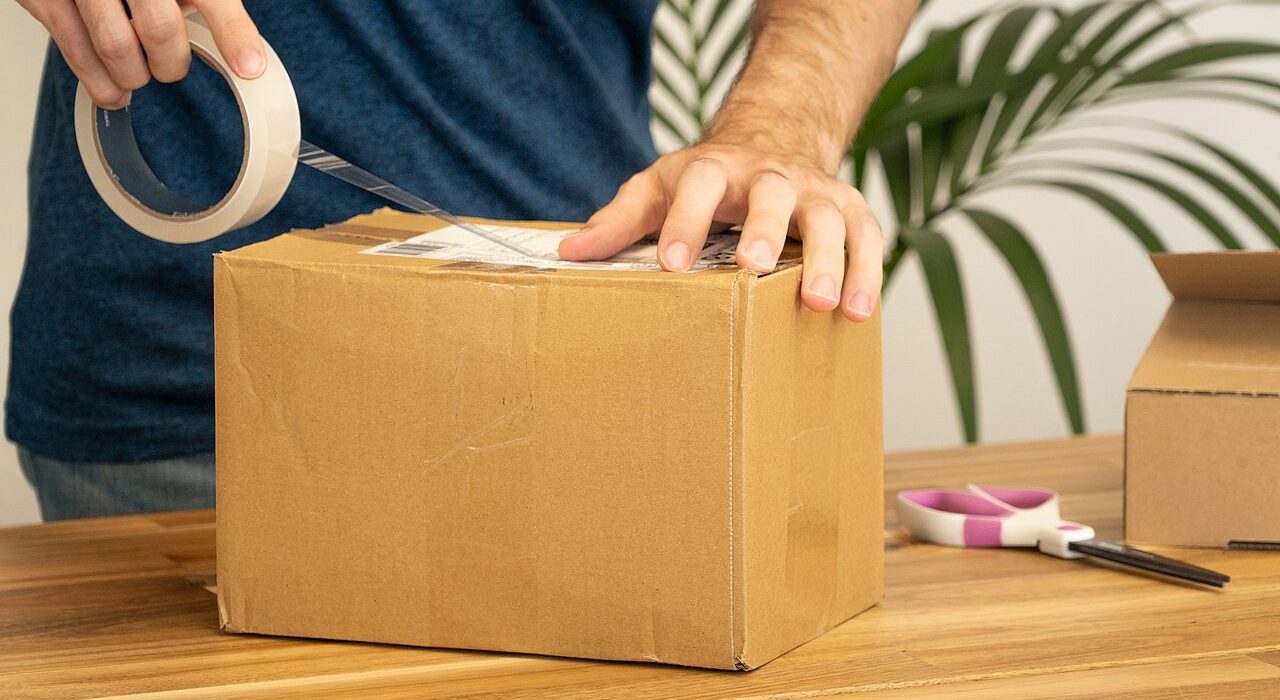
- Batch your work. Confirm orders in the morning, pack before the courier pickup, and book shipments in bulk.
- Pack for the journey. Use waterproof outer packaging during the monsoon, sealed and leak-proof containers for liquids and oils, and padding for glass.
- Make tampering visible. Branded tape or security seals reassure customers and help settle disputes.
- Include an invoice or packing slip with the order number, items and your contact details.
- Keep stock accurate. Overselling an out-of-stock item leads to cancellations after the customer has already waited. Our guide to inventory management for small online stores explains how to prevent this.
Communicating delivery clearly
Most “where is my order?” messages are a sign of missing information, not a courier problem. Reduce them by:
- Publishing a shipping policy that states delivery areas, typical times by region, charges, cut-off times, and what happens with failed deliveries.
- Showing estimated delivery times on product pages and at checkout.
- Sending an order confirmation, a dispatch message with the tracking link, and a follow-up after delivery.
- Being honest about delays around Eid, public holidays, strikes or severe weather, and posting notices on your site in advance.
Shipping internationally from Pakistan
The Pakistani diaspora and international interest in Pakistani clothing, handicrafts, food and beauty products make cross-border sales attractive, but they need extra planning:
- Carrier choice: international express carriers are faster and easier to track; postal options cost less but take longer.
- Prepayment: international orders are normally paid in advance by card rather than COD.
- Customs: declare contents and values accurately. Tell customers whether duties and taxes are included or will be charged on arrival.
- Restricted items: check the rules for food, liquids, cosmetics and anything containing alcohol or certain oils before you list them for international delivery.
- Pricing: display delivery charges clearly at checkout so international customers are not surprised.
Your delivery strategy checklist
- Decide delivery areas, speed, payment methods and who pays for shipping.
- Shortlist two or three couriers and request current rate cards and COD terms.
- Trial at least two couriers with real orders and compare the results.
- Choose a primary and a backup courier.
- Calculate your true cost per delivered order, including refusals.
- Pick a shipping pricing model and display it clearly.
- Set up an order confirmation routine for COD orders.
- Define a dispatch cut-off time and daily packing routine.
- Publish a shipping policy and link it from product pages and checkout.
- Send tracking links with every dispatch.
- Reconcile COD remittances against delivered orders every week.
- Review delivery success, refusals and delivery times by city every month.
How Baselyne helps
Baselyne includes integrated shipping alongside both cash on delivery and Visa and Mastercard payments, so you can offer customers the choice they expect while encouraging prepayment where it makes sense. Inventory management keeps stock accurate across your channels, customer profiles keep each buyer’s purchase history in one place (useful when deciding who needs advance payment), and reports show what is selling and where. See the full feature list, compare plans, or talk to our team about how your delivery setup would work. You can also start a 14-day free trial.
Frequently asked questions
Which courier is best for an online store in Pakistan?
There is no single best courier for every store. The right choice depends on where your customers are, how much you rely on cash on delivery and how quickly you need COD payments. Trial two couriers with real orders and compare delivery success, speed and remittance times.
Should I offer free delivery?
Free delivery can increase conversions, but the cost has to come from somewhere. A free-shipping threshold set slightly above your average order value often works well, because it encourages larger orders while protecting your margin on small ones.
How can I reduce refused cash-on-delivery orders?
Confirm orders by phone or WhatsApp before dispatch, collect complete addresses, dispatch quickly, share tracking, describe products accurately, and ask for advance payment on high-value orders or from customers with a history of refusals.
Do I need more than one courier?
Most growing stores benefit from at least two. A backup protects you during service disruptions and peak seasons, and some couriers perform better in particular cities or regions than others.
Can I ship internationally with cash on delivery?
Generally, international orders are prepaid by card. Cross-border COD is uncommon and risky because of customs, long transit times and the high cost of returns. Offer secure card payment for international customers instead.