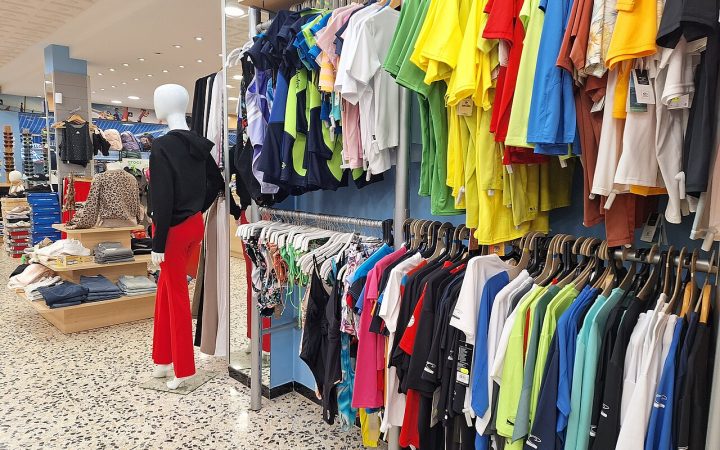

Online, your product description does the job of the salesperson in a shop: it answers questions, removes doubts and helps the customer picture the product in their life. A good description is not about clever adjectives. It is about giving the right buyer the right information, in the right order, so that clicking “Add to cart” feels like the obvious next step.
Key takeaways
- Write for one specific buyer and answer the questions they would ask a salesperson.
- Turn features into benefits, but keep the hard facts (size, material, weight, ingredients) easy to scan.
- Specific details beat vague praise. “2.5 metres of printed lawn” sells better than “premium quality fabric”.
- Answer purchase objections on the page: delivery time, payment options, returns, care and fit.
- Use a consistent template so every product page in your store is complete, original and search-friendly.
What a product description actually has to do
A shopper landing on a product page is usually asking four questions, often without realising it:
- Is this what I’m looking for? The name, main photo and first line must confirm it instantly.
- Is it right for me? Size, fit, compatibility, skin type, age range, dietary needs.
- Is it worth the price? Quality, materials, quantity and what makes it different.
- Is it safe to buy from this store? Delivery, payment options, returns and real reviews.
If your page answers all four clearly, you remove the reasons to hesitate. If it skips any of them, customers leave to ask on WhatsApp, search for a competitor, or simply forget about it. The rest of this guide shows how to answer each question well.
Know your buyer before you write a word
The same product can be described in completely different ways depending on who buys it. A bottle of cold-pressed hair oil might be bought by a young professional dealing with hair fall, a mother buying for her family, or someone sending a gift to relatives abroad. Before writing, jot down short answers to these questions:
- Who buys this most often, and who are they buying it for?
- What problem are they trying to solve, or what occasion are they shopping for?
- What do they worry about? (Authenticity, fit, freshness, whether it will arrive on time.)
- What words do they use? Look at customer messages, reviews, comments on your social posts and the questions people ask before ordering.
- What would make them choose you over the marketplace seller offering something similar?
Your customer messages are the best research you have. If people keep asking “Is this stitched or unstitched?” or “Does it contain fragrance?”, that answer belongs in the description, near the top.
A structure that works for almost any product
1. A clear, descriptive product name
Name products the way customers search for them, not with internal codes. “Embroidered Chiffon Dupatta, Black” is better than “Style DP-114”. Include the most important distinguishing attribute: size, colour, quantity or variant.
2. An opening line that sells the main benefit
The first one or two sentences should tell the buyer what the product does for them. Many shoppers never read further, so put the most persuasive, specific point first.
Weak: “This is a high-quality oil made with the best ingredients.”
Better: “Cold-pressed in small batches from fresh coconuts, this oil absorbs quickly into hair and skin without leaving a greasy finish.”
3. Benefits, backed by features
A feature is a fact about the product; a benefit is why that fact matters to the buyer. Pair them so the claim is believable:
- Feature: double-stitched seams. Benefit: holds its shape through regular washing.
- Feature: airtight glass jar. Benefit: keeps the honey fresh and free of plastic taste.
- Feature: laminated, wipe-clean pages. Benefit: children can practise writing again and again.
4. Scannable specifications
Put the hard facts in a short bulleted list or table: dimensions, weight or volume, materials or ingredients, what is included, care instructions, origin, shelf life. Customers comparing options scan for these, and missing details are a common reason for returns and refused cash-on-delivery parcels.
5. Practical buying information
Close the remaining doubts: expected delivery time for major cities and elsewhere, whether cash on delivery and card payments are accepted, your exchange or return policy, and how to get help. A link to your full refund policy and a size guide (where relevant) belong here.
6. Genuine social proof
Real reviews, customer photos and ratings reassure new buyers. Only ever display genuine feedback; invented testimonials damage trust permanently when spotted, and may break consumer protection rules in many countries.
Writing techniques that make descriptions persuasive
Be specific
Vague praise (“premium”, “best quality”, “amazing”) is ignored because every store uses it. Specific details create belief: thread count, GSM of fabric, the region the honey comes from, how many pages a workbook has, how many servings a pack makes.
Help them picture using it
Describe the moment of use. “Light enough to wear through a humid Karachi afternoon” or “Fits a laptop up to 15 inches plus a charger and a water bottle” helps the buyer imagine the product in their life, which is what physical shoppers do by touching and trying.
Answer objections before they are raised
If a product is more expensive than alternatives, explain why. If colours may look slightly different on screen, say so. If a size runs small, tell people to size up. Honesty reduces returns and builds repeat customers.
Match your brand voice
A luxury fashion label, a fried chicken brand and a children’s learning company should not sound the same. Decide whether your voice is warm, playful, expert or understated, and stay consistent across all products.
Make it easy to read
Short paragraphs, bullet points, bold for key facts, and no walls of text. Most shoppers in Pakistan browse on their phones, so check how the description looks on a small screen before publishing.
Before and after: examples by category
The table below shows how small changes turn a generic line into one that sells. These are illustrative examples, not real listings.
| Category | Weak description | Stronger description |
|---|---|---|
| Unstitched lawn suit | “Beautiful lawn suit, best quality, new design.” | “Three-piece printed lawn: 3 m shirt fabric, 2.5 m chiffon dupatta, 2.5 m dyed trouser. Soft, breathable weave for summer; embroidered neckline patch included.” |
| Organic honey | “100% pure natural honey.” | “Raw, unfiltered honey in a 500 g glass jar. Naturally crystallises in cooler weather: place the jar in warm water to soften.” |
| Essential oil | “Amazing oil for hair and skin.” | “10 ml pure rosemary oil. Dilute 3–5 drops in a carrier oil for scalp massage. Patch test before first use.” |
| Restaurant deal | “Tasty family deal.” | “Serves 4: 8 pieces of crispy chicken, 2 large fries, 4 dinner rolls and a 1.5 L drink. Delivered hot within our delivery zones.” |
| Learning resource | “Fun activity book for kids.” | “60-page tracing workbook for ages 3–5. Wipe-clean pages and a marker included, so it can be reused every day.” |
Details that matter for Pakistani and international buyers
Selling within Pakistan
- Stitched or unstitched: always state it clearly for clothing, along with fabric lengths for unstitched suits.
- Size charts in inches: include chest, length and shoulder measurements, not just S/M/L, because sizing varies widely between brands.
- Delivery and COD: mention cash on delivery and typical delivery times; these are deciding factors for many buyers.
- Language: English descriptions work well, but a familiar Urdu or Roman Urdu term (such as “kurti”, “dupatta”, “desi ghee”) helps customers recognise the product and matches how they search.
- Authenticity: for beauty, food and health products, state ingredients, batch or expiry information and how the product is stored.
Selling internationally
- Give measurements in both centimetres and inches, and weights in grams and ounces where useful.
- Explain items that may be unfamiliar abroad (for example, what a three-piece suit includes) without talking down to the diaspora customer who knows them well.
- Be clear about international shipping times, and that customs duties may apply in the destination country.
- Check that product claims, especially health or cosmetic claims, are allowed in the countries you ship to.
Product descriptions and SEO
Descriptions are also the main text Google reads on a product page. To help them rank:
- Write original copy for every product. Copied supplier text, or the same paragraph repeated across fifty products, gives search engines little reason to rank your page.
- Use the phrase customers search for in the product name and opening line, naturally and once or twice. Never stuff keywords.
- Add helpful detail that competitors leave out, such as usage tips, fit notes and answers to common questions.
- For products with variations (sizes, colours, weights), keep them on one page rather than creating near-duplicate pages.
For the wider picture, see our e-commerce SEO checklist.
A reusable product description template and checklist
Use this as a standard for every product you add. A consistent template is also easier to hand over to a team member or freelancer.
- Product name: what it is plus its key attribute (size, colour, quantity).
- Opening line: the single most important benefit, in one or two sentences.
- Three to five benefit bullets: each backed by a concrete feature.
- Specifications: dimensions, weight or volume, materials or ingredients, what’s included.
- Fit, use or care: size guidance, how to use, how to wash or store.
- Delivery and payment: typical delivery times, COD and card options, returns link.
- Photos: front, back, close-up of detail or texture, product in use, and size reference.
- Reviews: genuine ratings and customer photos, if available.
- Final check: read it on a phone, check spelling and prices, and make sure every question customers usually ask is answered.
Tip: Keep a running list of every question customers ask on WhatsApp, Instagram or live chat. Once a month, add the answers to the relevant product pages. Each answered question is one less reason for a shopper to hesitate.
How Baselyne helps
Baselyne gives you the tools to present products properly. You can add unlimited products, each with variations and individual prices, so sizes, colours and pack options live on one well-written page. Themes from the theme catalogue display descriptions, specifications and photos clearly on mobile, and if you need a layout built around your brand, our Custom Theme Design service creates one from scratch. Built-in reports, together with Google Analytics, show which products sell and which only get views, so you know which descriptions to improve first, and our support team is available around the clock by phone and email if you get stuck. See everything included on the features page, and if you are still choosing a look for your store, read what to consider when choosing a theme. You can try Baselyne free for 14 days.
Frequently asked questions
How long should a product description be?
Long enough to answer every question a buyer would reasonably ask, and no longer. A simple item such as a phone cover may need 80 to 120 words plus specifications; a high-value or technical product may need 300 words or more. Structure matters more than length.
Should I write product descriptions in English or Urdu?
Write in the language your customers search and shop in. For most Pakistani online stores that is English, with familiar Urdu or Roman Urdu product terms where they help. If a large share of your buyers prefer Urdu, consider adding a short Urdu summary.
Can I use AI tools to write product descriptions?
They can help with a first draft, but always edit the result. Add accurate specifications, details only you know, and your brand’s voice, and check every claim. Generic, unchecked text rarely persuades and may contain errors.
How many photos should a product page have?
Aim for enough to replace handling the product in a shop: usually four to eight, including front, back, a close-up of texture or detail, the product in use, and something that shows its size. Clothing benefits from photos on a model.
How often should I update product descriptions?
Review your best sellers and most-viewed products every few months, and update any page when customers keep asking the same question, when returns point to a misunderstanding, or when the product itself changes.